
- Home
- CPD Library
- Accreditations
- CQS
- Apprenticeships
LEGAL PATHWAYS
CONVEYANCING PATHWAYS
DATA APPRENTICESHIPS
RESOURCES
- Events

- Home
- CPD Library
- Accreditations
- CQS
- Apprenticeships
LEGAL PATHWAYS
CONVEYANCING PATHWAYS
DATA APPRENTICESHIPS
RESOURCES
- Events
How to Become a Chartered Legal Executive
To become a Chartered Legal Executive you complete a CILEx Regulation-approved Level 6 Chartered Legal Executive qualification, either the government-funded Apprenticeship or one of our privately-funded Diplomas. Most learners qualify within two to four years depending on the route they take and the qualifications they already hold, finishing with full practice rights. The route that suits you best depends on where you are in your career today.

Starting Out in Law
If you are at the beginning of your legal career – a school leaver, a career changer or someone in a non-legal role looking to switch into law – you can still qualify as a Chartered Legal Executive. The Non-Graduate Diploma takes you from foundations all the way to practice rights, and a Paralegal Apprenticeship can be a useful stepping stone if you want a funded entry route first.
Already Working in Law
If you are already a paralegal, a fee-earner or a law graduate, you can move directly onto a Chartered Legal Executive route. Law graduates can use the Graduate Diploma to skip the foundations; paralegals with experience can move onto either the Diploma or the funded Level 6 Apprenticeship and progress straight to specialist practice.
What is a Chartered Legal Executive?
A Chartered Legal Executive is a fully qualified, regulated legal professional with practice rights in their chosen specialism. Once you achieve Chartered status under CILEx Regulation, you can act as a Commissioner for Oaths under the Legal Services Act 2007, run your own legal practice as an authorised person, and use the protected professional title CILEX Lawyer. The qualification sits alongside solicitors and barristers as a recognised route into legal practice, and the path you take to get there can be funded by your employer or paid for privately, depending on your situation.
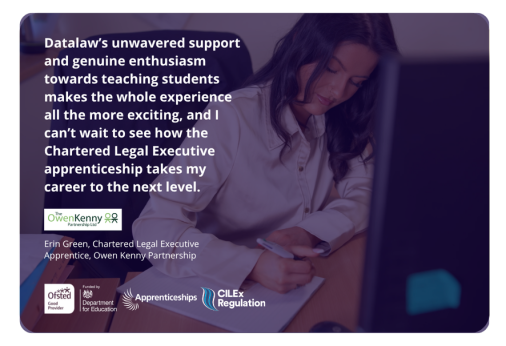
Want to Learn More About Becoming a Chartered Legal Executive?
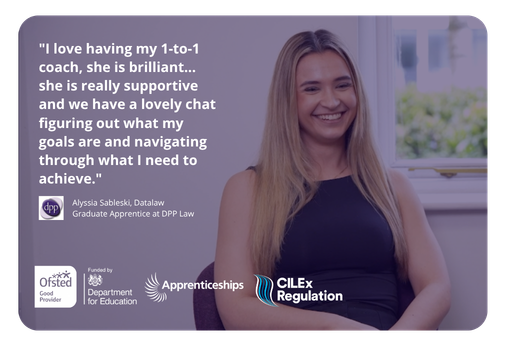
If You Are Just Starting Out in Law
You do not need a law degree to begin the journey to Chartered Legal Executive status. The routes below are designed for learners with little or no formal legal background, whether you are starting your first legal role or moving from a different career into law.
The Non-Graduate Chartered Legal Executive Diploma is the privately-funded route for people working in a legal role without a law degree. You build your legal foundations from the ground up – the legal system, public law, human rights and core practitioner skills – then progress into deeper practitioner units, a specialist pathway and a Professional Readiness stage. You qualify with full Chartered Legal Executive status and practice rights in your chosen specialism. Online study with payment plans from £89 a month.
If your employer is willing to sponsor you, the Level 6 Apprenticeship is the fully government-funded version of the same Chartered Legal Executive qualification. You need to be in a legal role on UK payroll, with at least 50% of your working time in England. Your firm draws on its apprenticeship levy or pays a 5% co-investment if non-levy. The structure is fixed at 29 months with off-the-job learning hours and end-point assessment.
If you are not yet in a legal role, the Level 3 Paralegal Apprenticeship is a popular funded stepping-stone. You spend 13 months building entry-level legal skills, secure a paying paralegal role, and then have the experience and employment status you need to move onto a Chartered Legal Executive route. Many learners use this pathway to enter law without a degree, especially school leavers and career changers.
If You Are Already Working in Law
If you already work in a legal team, hold a law degree, or have completed a paralegal qualification, you can move straight onto a Chartered Legal Executive route. The pathways below acknowledge what you already know and skip you ahead accordingly.
If you hold an LLB, a non-law degree plus the GDL or PGDL, or an equivalent qualifying law qualification, the Graduate Diploma is the privately-funded fast-track. You skip the foundations and focus on the applied practice content most degrees do not cover – dispute resolution, conveyancing, wills and probate, plus the day-to-day skills lawyers actually use. You then complete a specialist pathway and Professional Readiness stage to qualify with full practice rights.
The funded Level 6 Apprenticeship is open to graduates and to learners who have completed a paralegal qualification. The 29-month programme combines structured study with day-to-day legal practice, fully covered by your employer’s apprenticeship levy or a 5% non-levy contribution. You qualify with the same Chartered Legal Executive status, practice rights and CILEX Lawyer title as the Diploma route.
Already through an Advanced Paralegal Apprenticeship or a Level 5 paralegal route? You are well placed to step up directly onto the Level 6 Apprenticeship or onto a Chartered Legal Executive Diploma, often with module exemptions for the prior qualifications you hold. Talk to our coordinators about which exemptions apply to you.
Companies That Have Chosen This Route


What You Learn on the Way to Chartered Status
The journey to Chartered Legal Executive status is built in stages, regardless of which route you take. You start with foundational legal knowledge, build practitioner-level skills, choose a specialist pathway and finish with a Professional Readiness stage that demonstrates you are ready to practise. The tabs below walk through each stage so you can see exactly what you will study, and what you walk away with at the end.
If you are starting without a law degree, the foundation stage builds your core legal knowledge over a year of online study. Expect modules covering the legal system, public law, human rights, and the foundation skills lawyers rely on every day. Graduate learners skip this stage entirely – your degree already covers it.
This is where the qualification starts to feel like real legal practice. You move into applied content – dispute resolution, conveyancing, wills and probate, advanced legal research, drafting, client interviewing and case management. Graduate route learners begin here, while Non-Graduate learners arrive after the foundation stage.
Pick the area of law you want to practise in. The pathway you choose is the one in which you will hold practice rights when you qualify. Common pathways include:
- Civil Litigation
- Conveyancing
- Criminal Practice
- Family Practice
- Wills and Probate
- Employment Law
- Business Practice
Most learners pick a pathway that mirrors the work they already do or want to move into.
The final stage demonstrates you have all the competencies CILEx Regulation requires for authorisation. You evidence the technical, ethical and practitioner skills needed for independent practice in your specialism. Because Professional Readiness is built into every route, there is no separate authorisation application after you finish – you exit the programme already authorised.
- A Chartered Legal Executive with full practice rights in your chosen specialism
- Authorised to use the protected professional title CILEX Lawyer
- Able to act as a Commissioner for Oaths under section 113 of the Legal Services Act 2007
- An authorised person under the Legal Services Act with the right to run your own legal practice
- A regulated lawyer with parity alongside graduates of the apprenticeship route
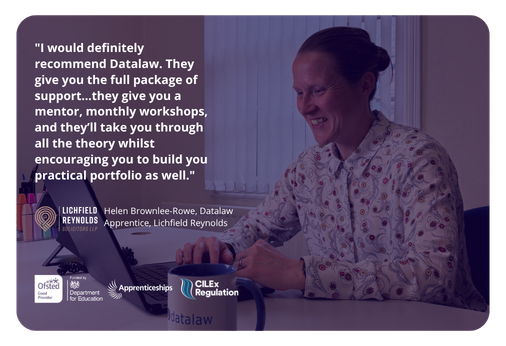
Can You Become a Chartered Legal Executive?
- School leaver, career changer or non-graduate already working in a legal role - the Non-Graduate Diploma is open to you.
- Law graduate (LLB or non-law degree plus GDL/PGDL) - the Graduate Diploma is the privately-funded fast-track.
- Already in a legal role with employer support - the Level 6 Apprenticeship gives you a fully government-funded route.
- No legal experience yet - start with a Paralegal Apprenticeship to build the experience needed for the Level 6 routes.
How Will You Pay for the Programme?
There is no single price tag for becoming a Chartered Legal Executive – the cost depends on which route you take. The four options below cover almost every learner, from school leavers paying nothing themselves to law graduates self-funding a Diploma. Our coordinators will help you work out which mix is realistic for your situation.
- Government funding through an apprenticeship - your employer pays nothing (levy) or 5% co-investment (non-levy).
- Private payment plans on the Diploma - from £89 a month, with longer terms available.
- Employer sponsorship of a private Diploma - some firms cover the Diploma fee directly without using the apprenticeship levy.
Speak to our coordinators about combining options – some learners blend a paralegal apprenticeship with a later Diploma to keep costs low.

Trusted by 27,000+ Legal Professionals


Talk to a Datalaw Career Coordinator
Every learner takes a slightly different route to Chartered status, depending on prior qualifications, employer support and how quickly you want to qualify. A short conversation with our coordinators is the fastest way to work out the right plan for your circumstances.
- Map the right route for your career stage and any qualifications you already hold.
- Identify any module exemptions that could shorten your study time.
- Work out a payment plan or apprenticeship arrangement that suits you and your employer.
- Plan your specialist pathway and how it lines up with the work you want to do.
Coordinators reply within one working day during UK business hours.
How Firms Support Staff to Become Chartered Legal Executives
Many of our learners are sponsored, mentored or formally supported by their employer on the journey to Chartered status. Datalaw is a CILEx Regulation approved training and exam centre, and our learners qualify with the same practice rights regardless of which route their firm chooses to back. Below are the most common ways law firms get involved.
- Use the apprenticeship levy to fund a Level 6 Apprenticeship at zero cost to the firm.
- Sponsor a Diploma directly without touching the levy - useful for non-levy paying firms.
- Combine a Paralegal Apprenticeship now with a later Diploma to nurture future Chartered Legal Executives in-house.
- Multiple cohort start dates each year so onboarding aligns with your hiring and resourcing plans.
Talk to our team about cohort enrolments and volume pricing for firms training multiple learners at once.
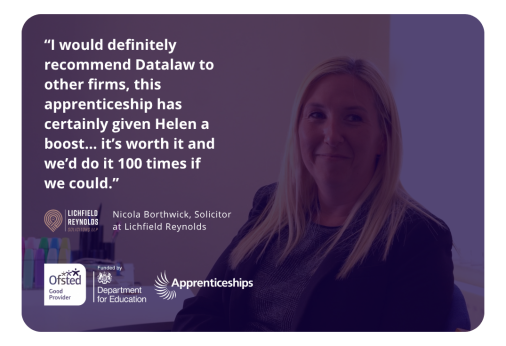
Discover What It Means To Join Datalaw



What Datalaw Learners Achieve
Becoming a Chartered Legal Executive is more than passing exams – it changes the kind of work you do, the firms that hire you and the level you can charge at. The numbers below come from learners across our apprenticeship, Diploma and paralegal cohorts.
93%
of learners who finish a CILEx Regulation route stay in the legal profession beyond five years.
85%
of supervisors say their CLE-qualified team members took on senior fee-earning work within twelve months.
100%
of learners qualify with practice rights, the CILEX Lawyer title and authorised-person status.
Frequently Asked Questions About Becoming a Chartered Legal Executive
How much does it cost to become a Chartered Legal Executive?
There is no single price – it depends on which route you take. The Level 6 Apprenticeship is fully government-funded for levy-paying employers, with non-levy employers paying just 5% of training costs (capped at £1,350 across the whole programme). The privately-funded Chartered Legal Executive Diplomas use monthly payment plans starting from £89 a month, with longer terms available on request. Some firms also sponsor learners through a Diploma directly, without using the apprenticeship levy.
How long does it take to become a Chartered Legal Executive?
Most learners qualify in two to four years. The Level 6 Apprenticeship is structured as a 29-month programme with off-the-job learning hours and an end-point assessment. The Diplomas are flexible online study, so the timeline depends on how quickly you work through the foundation stage (if applicable), practitioner units, specialist pathway and Professional Readiness stage. Graduate Diploma learners usually finish faster than Non-Graduate Diploma learners because their qualifying law degree means they skip the foundation year.
Do I need a law degree to become a Chartered Legal Executive?
No. The Non-Graduate Chartered Legal Executive Diploma is open to legal team members without a law degree, and the Level 6 Apprenticeship can be taken without a law degree if your employer is willing to sponsor you. If you do hold an LLB, a non-law degree plus the GDL or PGDL, or another qualifying law qualification, the Graduate Diploma is the privately-funded fast-track that lets you skip the foundation year.
What is the difference between a Chartered Legal Executive and a solicitor?
Both are regulated lawyers with practice rights, but they qualify through different regulators and routes. Solicitors are regulated by the Solicitors Regulation Authority and qualify by passing the SQE; Chartered Legal Executives are regulated by CILEx Regulation and qualify by completing a Level 6 qualification, a specialist pathway and the Professional Readiness stage. Chartered Legal Executives hold practice rights specifically in their chosen specialism (for example litigation or conveyancing), can act as a Commissioner for Oaths under the Legal Services Act 2007, and can run their own legal practice as an authorised person. The Chartered route tends to be faster, lower-cost and more flexible than the solicitor route, particularly for people already working in legal teams.
Take Your First Step Toward Chartered Status
Explore Datalaw Programmes That Lead to Chartered Status
CILEx Level 6 Qualification
The dual-route page that compares the funded apprenticeship and the private Diploma side by side – useful once you have decided which type of learner you are.
- Funded or private routes
- Same Chartered Legal Executive end-point
- Online delivery
CILEx Level 6 Diploma
The Diploma-led landing page covering both the Graduate and the Non-Graduate Diploma in detail, including monthly payment plans and curriculum stages.
- Graduate or Non-Graduate routes
- Privately funded, online study
- Practice rights included
Advanced Paralegal Apprenticeship
The Level 5 funded route that bridges paralegal experience and Chartered Legal Executive content, with built-in SQE1 exposure.
- 12-24 months duration
- Government funded
- SQE1 prep included